
Review this scenario
Delivery and courier platform
Delivery becomes expensive when dispatch, route order, courier status, proof of delivery and customer updates are managed manually.
Delivery becomes expensive when dispatch, route order, courier status, proof of delivery and customer updates are managed manually.
Before implementation, data is often spread across chats, spreadsheets, separate POS tools, calendars and personal employee phones. Managers do not see the full picture, owners cannot easily understand process profitability, and customers receive a fragmented experience.
After implementation, one object — an order, customer, task, supply or booking — moves through the required steps. Staff work in role-specific interfaces, while the business gets control, history and analytics without manually rebuilding the data.
The main result is less manual work and fewer gaps between teams. The customer sees a clear journey, staff see the next action, and the owner sees the entire process.
• Dispatchers can see delivery orders and assign couriers.
• Couriers work from a mobile route interface with statuses and proof actions.
• Shop-and-deliver tasks can include budget, shopping list and receipt photo.
Delivery is not only a map. A delivery workflow includes order readiness, payment status, pickup location, destination, courier availability, route order, customer communication, proof of delivery and sometimes a shopping task. If dispatch is handled manually, every delay becomes a call, every address mistake becomes a lost route, and every missing proof becomes a dispute.
SABSUS gives the dispatcher and courier different views of the same operation. The dispatcher sees orders and courier tasks, while the courier sees the assigned route, addresses, status buttons, chat and completion actions. For shop-and-deliver tasks, the courier can see the client budget, shopping list, receipt photo step and purchase completion. This is useful for restaurants, grocery delivery, local stores, rental delivery and service businesses with field teams.
The value is operational control. Managers can see which orders are waiting, which are already on the route, who is responsible and what proof exists after delivery.
These screenshots show the specific SABSUS workflows relevant to this scenario.
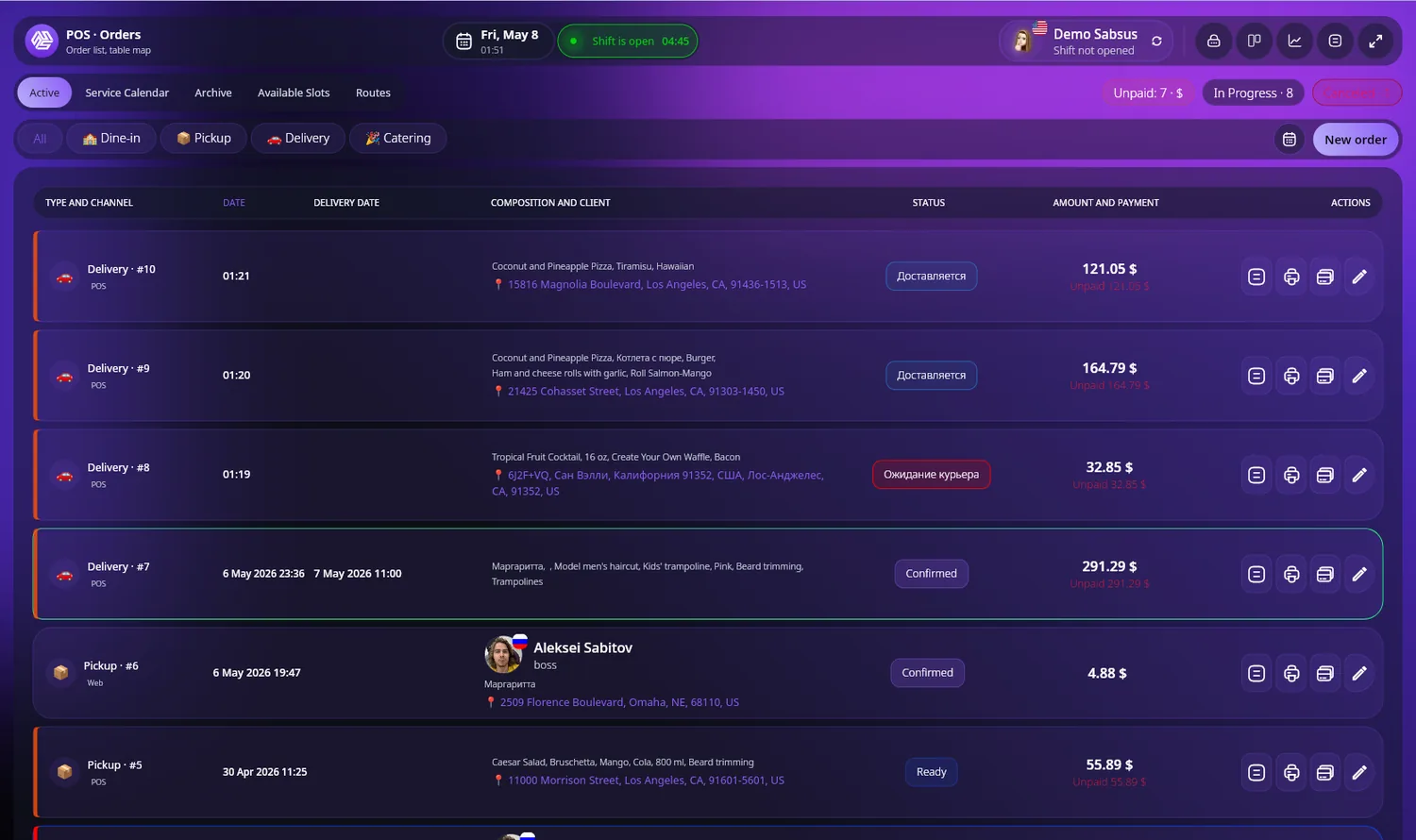
Order list with statuses and payment actions
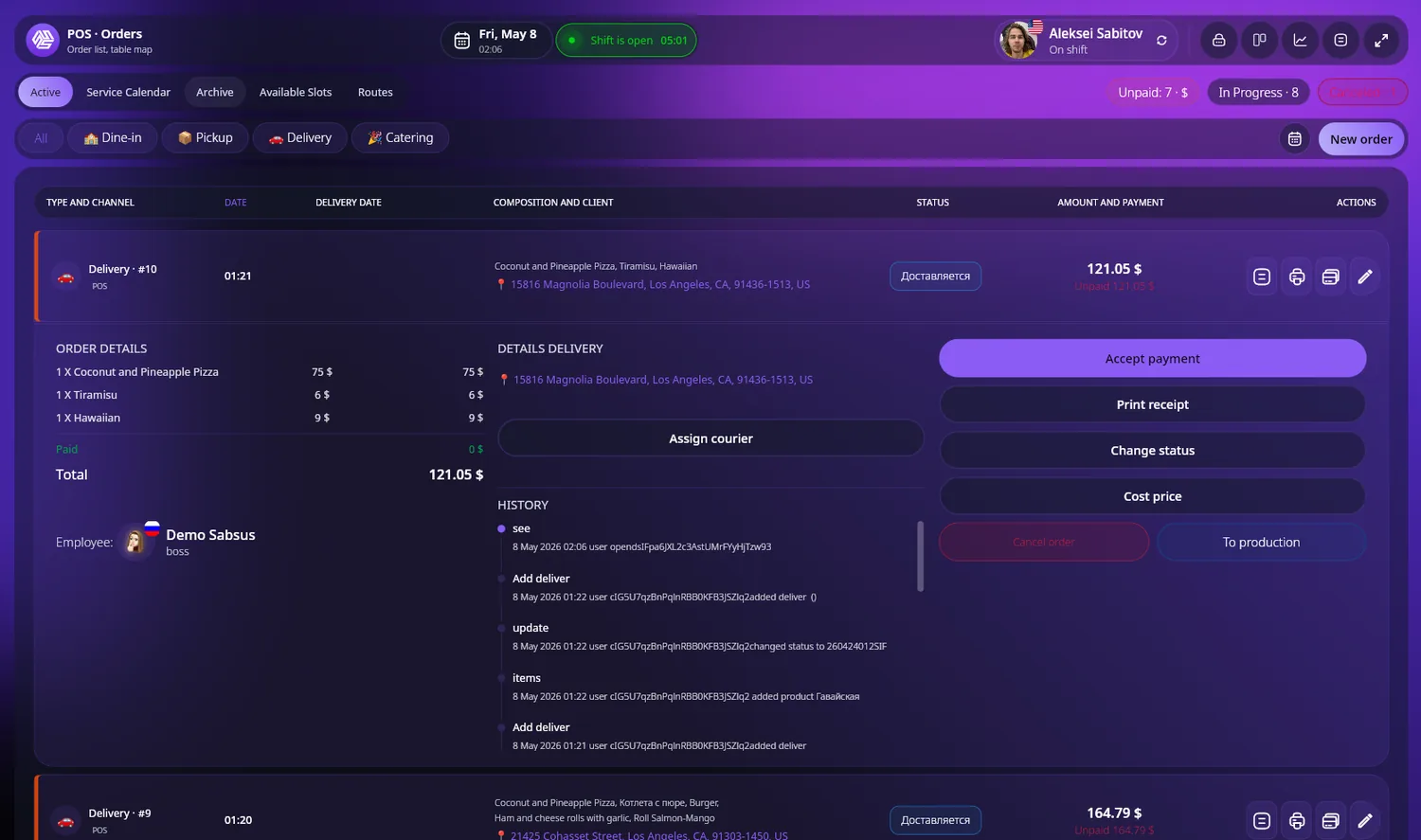
Expanded POS order details
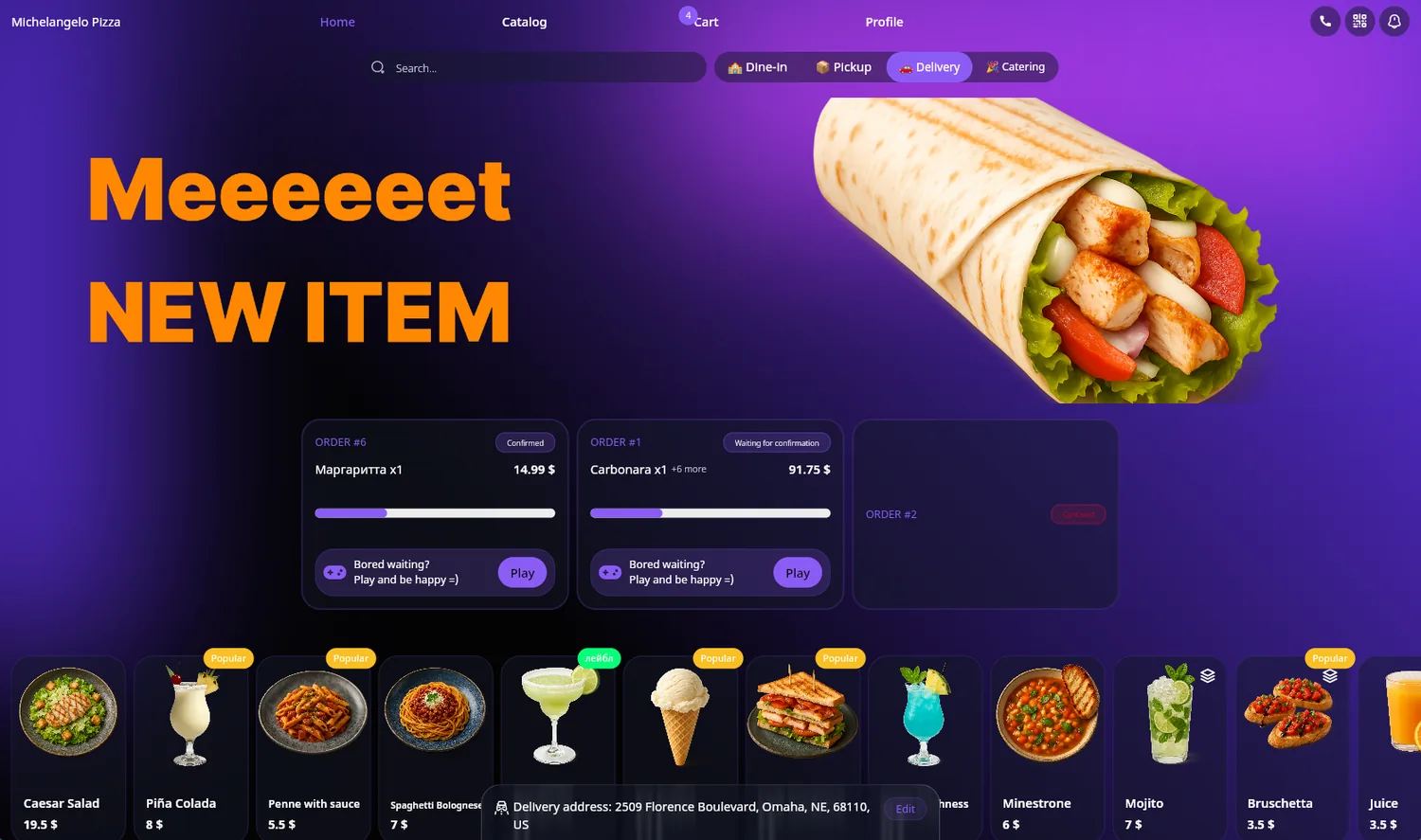
Customer storefront with brand colors
Product interface preview
Select a plan, leave your contacts, and we will review your business: which modules to launch first, which workflows matter most, and which implementation model fits.