
Review this scenario
White-label business platform
White-label is for businesses that want their customer experience to look like their own product, not like rented software.
White-label is for businesses that want their customer experience to look like their own product, not like rented software.
Before implementation, data is often spread across chats, spreadsheets, separate POS tools, calendars and personal employee phones. Managers do not see the full picture, owners cannot easily understand process profitability, and customers receive a fragmented experience.
After implementation, one object — an order, customer, task, supply or booking — moves through the required steps. Staff work in role-specific interfaces, while the business gets control, history and analytics without manually rebuilding the data.
The main result is less manual work and fewer gaps between teams. The customer sees a clear journey, staff see the next action, and the owner sees the entire process.
• Customer screens, catalog and colors can match the company brand.
• The business can keep SABSUS as the operating engine behind the branded experience.
• Useful for chains, agencies, delivery projects and businesses with their own audience.
White-label is important when the business wants the customer to experience its own brand, not a third-party platform. A restaurant, delivery company, rental company, service business or local chain may already have an audience and wants the storefront, colors, order flow and customer profile to feel native. At the same time, the business still needs a real operating system behind that branded layer.
SABSUS separates the customer experience from the operating engine. The client can see branded colors, product cards, cart, checkout, profile, loyalty, payment and order status screens. Staff can work in POS, CRM, delivery, inventory, kitchen or management screens. The company can use the same internal system while presenting a polished customer interface under its own identity. This is useful for businesses that want independence from marketplaces and aggregators.
The result is a branded customer journey with a real operational backend. The business keeps its customer relationship, data, visual identity and process control.
These screenshots show the specific SABSUS workflows relevant to this scenario.
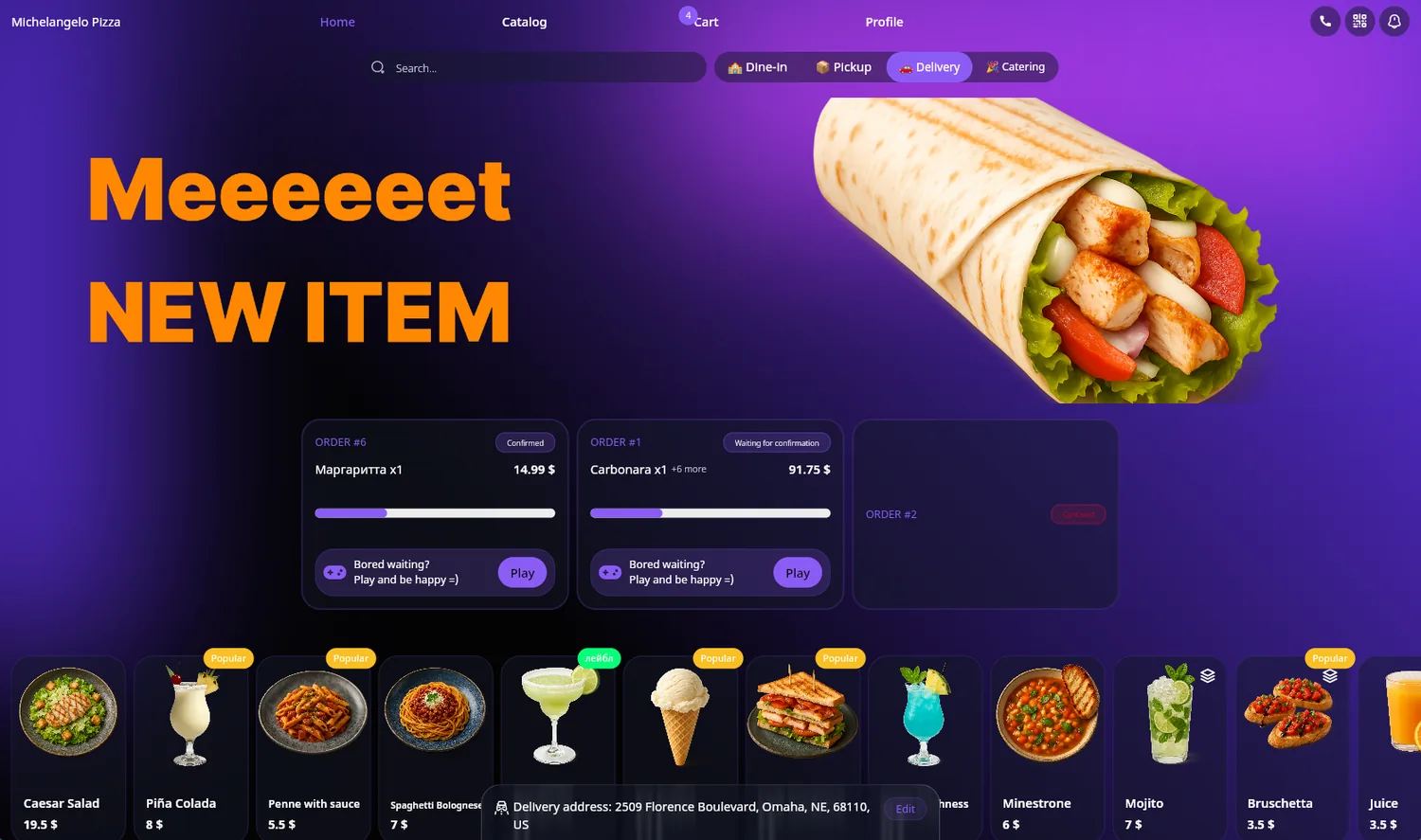
Customer storefront with brand colors
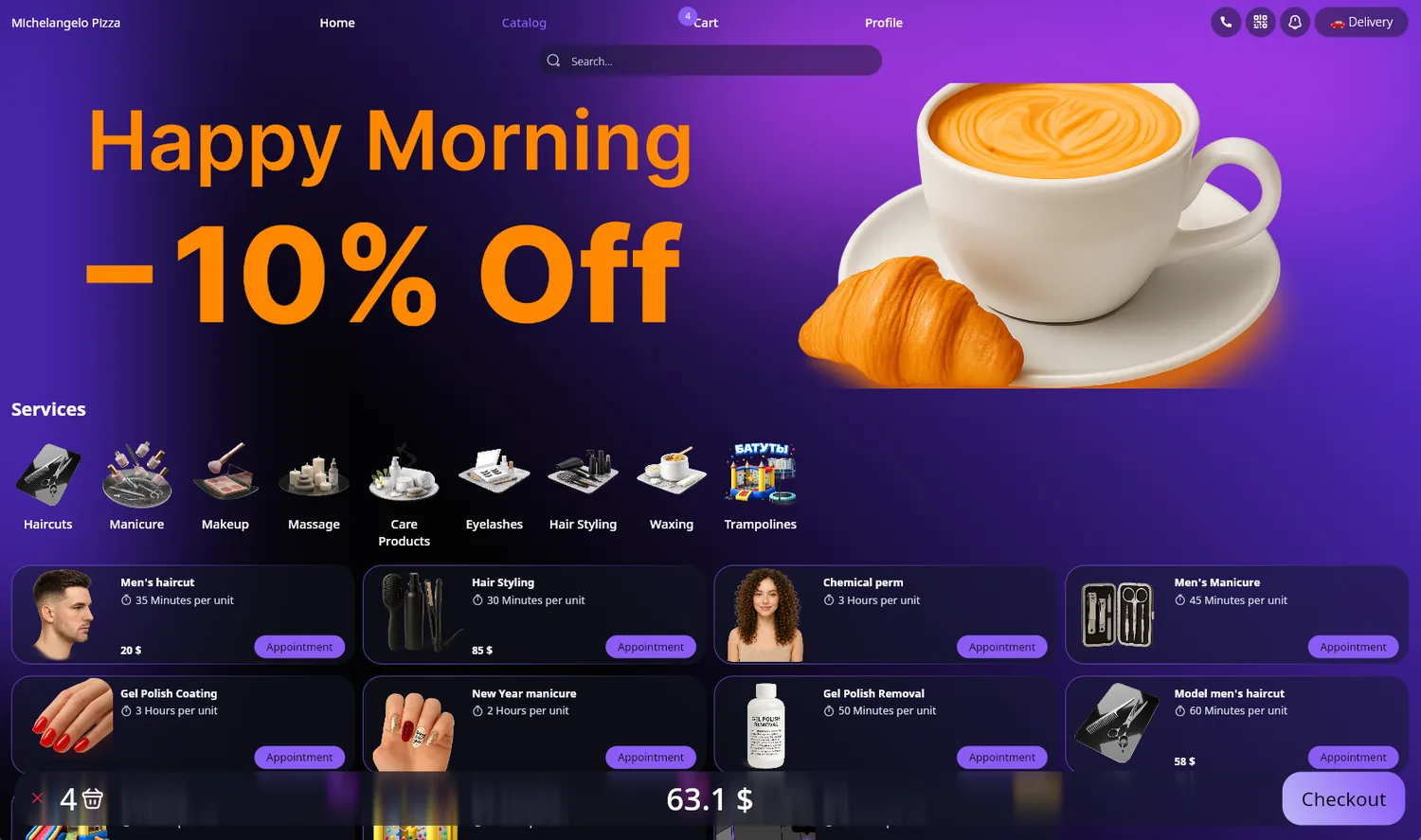
Web order flow with products and checkout
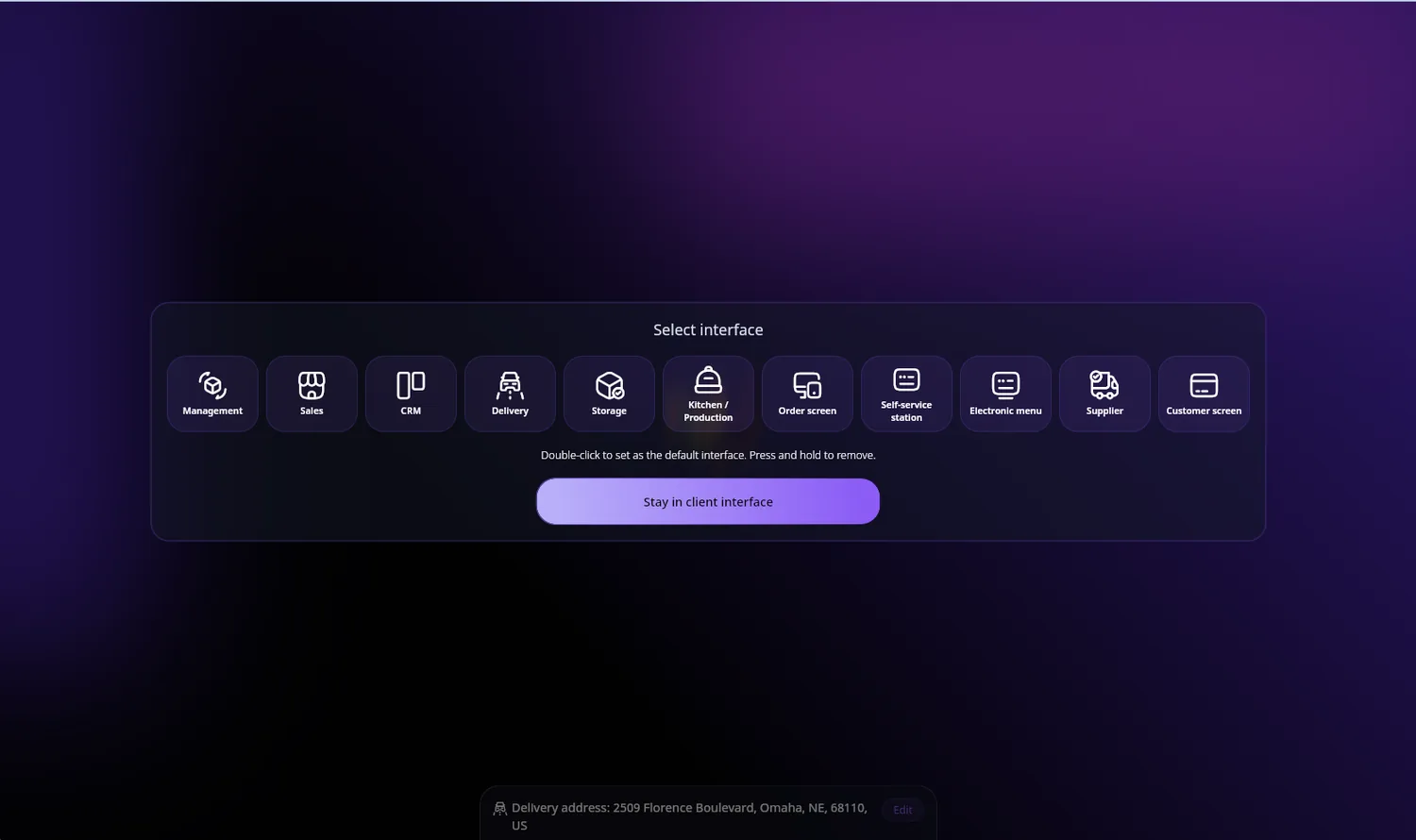
Role-based interface selection
Product interface preview
Select a plan, leave your contacts, and we will review your business: which modules to launch first, which workflows matter most, and which implementation model fits.